
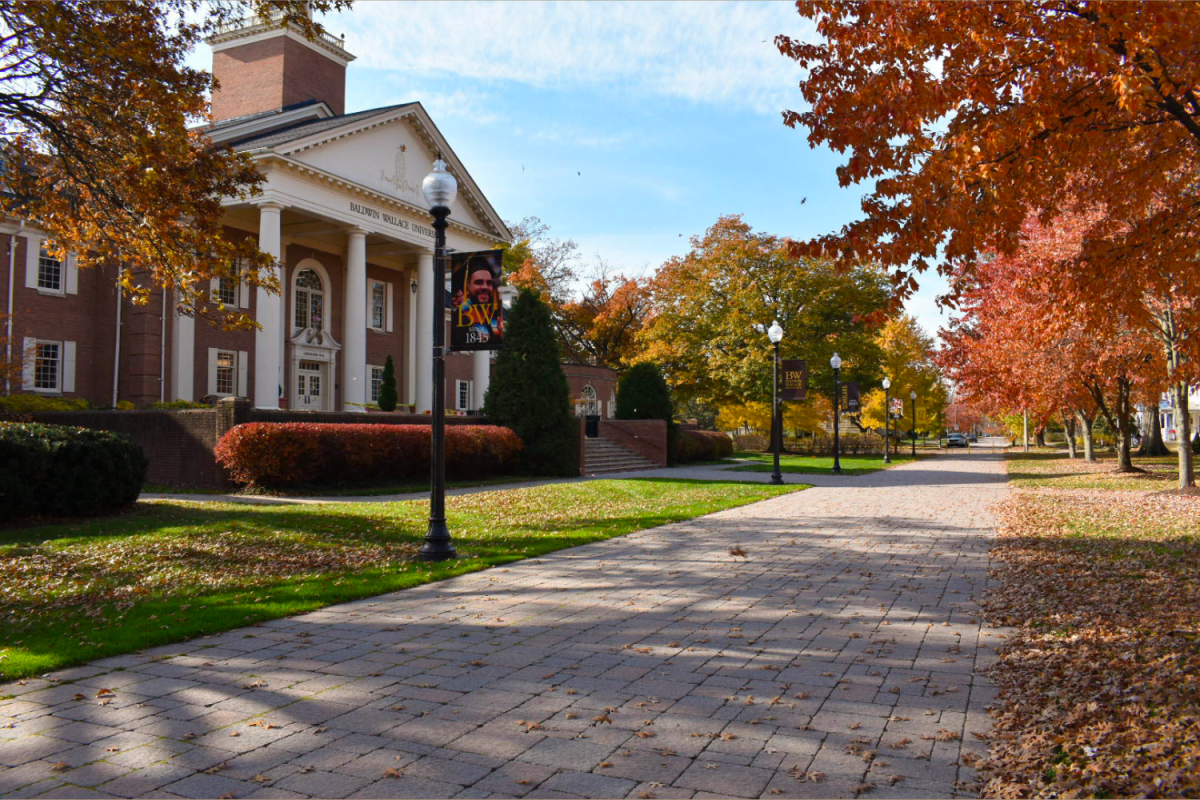















Four Baldwin Wallace University students presented ACL research in August at a national conference in Pittsburgh, Pennsylvania. Kelly Carver and Kalyn Rich, junior exercise science majors, along with exercise science graduates Mason Keisel and Aaron Harris, studied how basketball players’ knees experience lateral cutting.
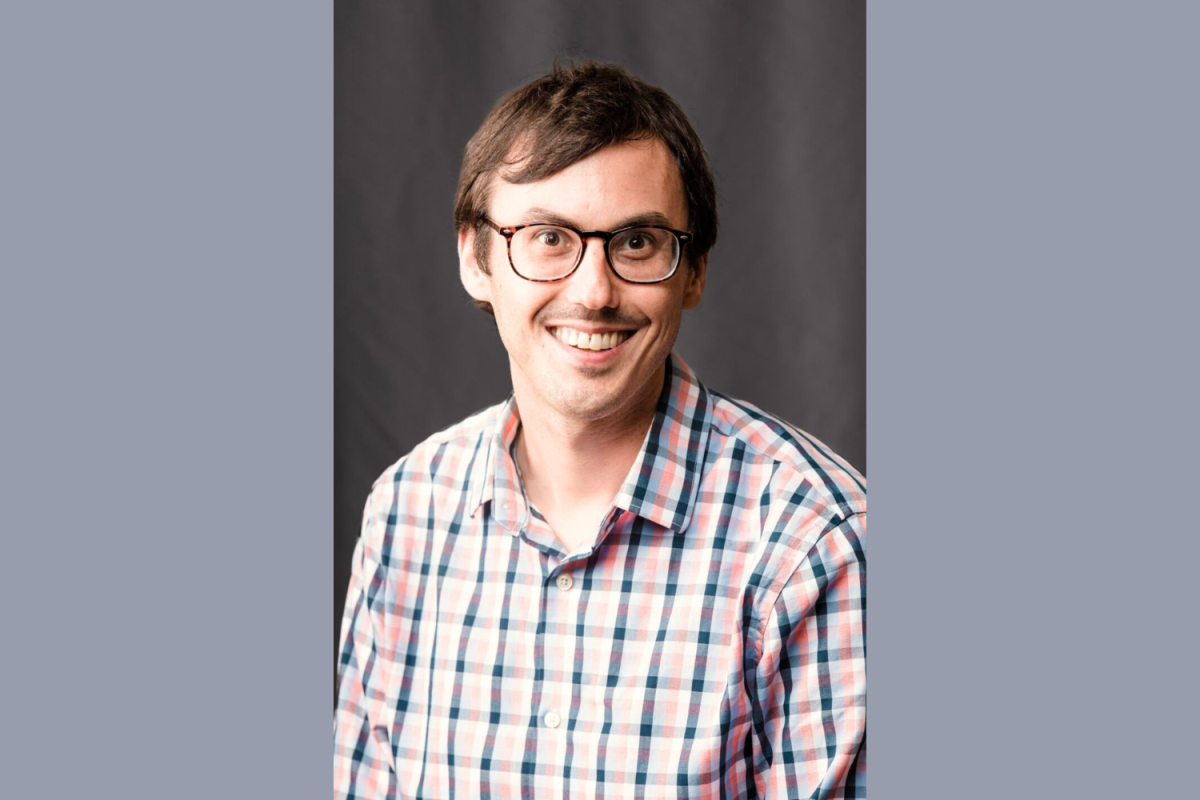
Under the guidance of Alex Morgan, professor of exercise science at BW, the students presented a project that examined how unanticipated movements increase stress on the knee with an aim to better understand one of sports’ most common injuries.
“We know athletes are more likely to injure their knee if they’re coming to a quick stop or making a quick cut,” Morgan said. “And it’s even riskier when they don’t know which direction they’ll have to go.”
The group designed a study that utilized accelerometers strapped to the subjects’ legs to measure the impact of the forces during the cutting movements. They compiled a group of basketball players with varying skill levels and heights for their research. Color-coordinated cones and audio recordings were used to create game-like, unpredictable movements.
Morgan guided the project and said that he tries to give the students space to create and own their own research.
“I give them an overall idea. We might focus on ACL injuries, for example, but then I ask, where would you like to go with that?” Morgan said. “The hardest part is getting them to recognize what we don’t know in the literature. Once they see that gap, that’s where their study comes to life.”
With this research, the team presented their work at a national conference. Surrounded by professionals in the field, many were surprised to hear they were just undergraduate students.
“People were asking if we were PhD students,” Rich said. “That was really validating.”
For Morgan, the highlight wasn’t the research itself, but watching the students transform into researchers.
“Seeing them click, going from being overwhelmed at the start to leading new students, now that’s the best part,” he said.
Experiences like these can lead and shape students’ career paths. It’s practice for the future. Carver said that, because of this practice, she realized that she loved this kind of research, and hopes to learn more about it moving forward.
Though BW doesn’t have the same equipment as larger universities, Morgan believes that the smaller scale increases student opportunities. For example, each undergrad gets one-one-one mentorship and the chance to run projects entirely by themselves, which isn’t always the case at larger universities.
BW is able to provide publishable research opportunities for students in every major, not just in exercise science.
“Don’t be afraid to say yes to opportunities,” Rich said. For many students, that yes can start them into their research journey.
