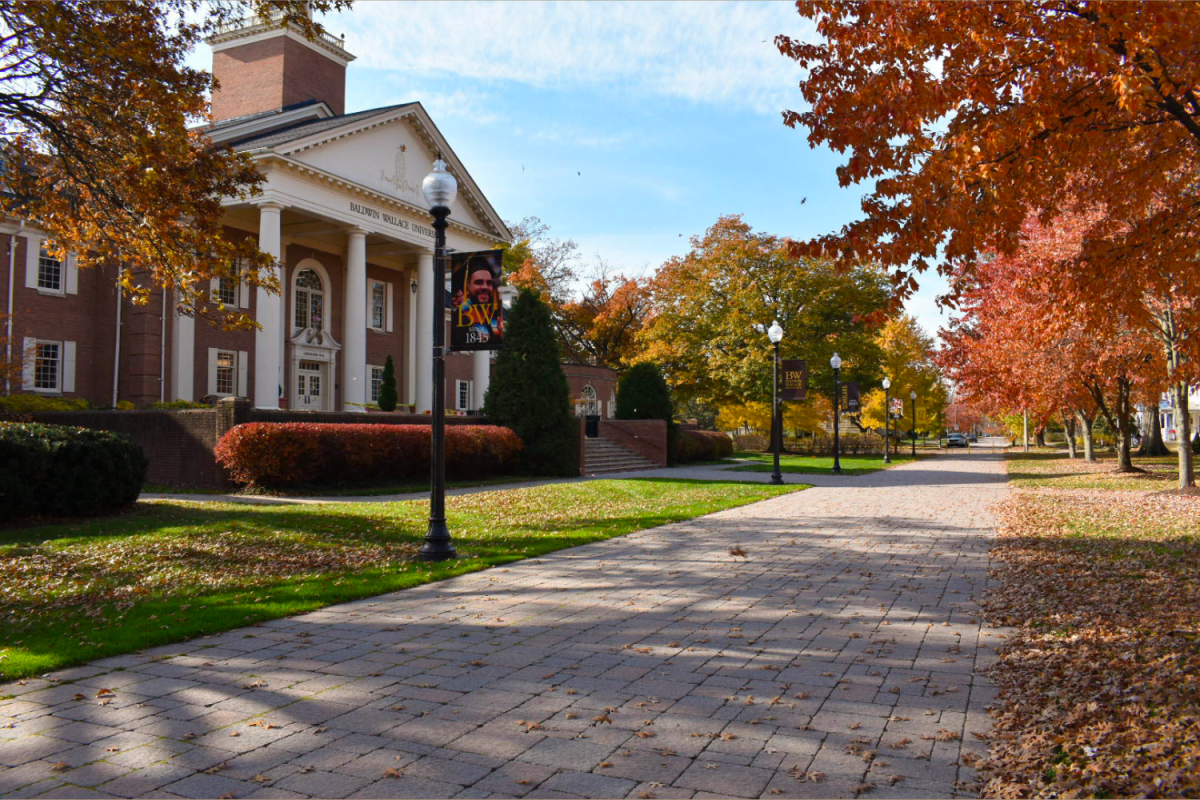
















Baldwin Wallace students rallied outside of Strosacker Hall last Friday to protest the actions of U.S. Immigration and Customs Enforcement (ICE) and demand that the University declare itself a sanctuary campus.
Immigration activists define “sanctuary campuses” as universities that take specific measures to not cooperate completely with federal detention requests and immigration enforcement agents.
The protest is a response to the aftermath of two ICE shootings in Minneapolis this year, both involving American citizens, which have led to increased protests and a general strike both in Minneapolis and across the country over the past month.
“Here at Baldwin Wallace, I feel that silence is complicity,” said Carly Voltz, a sophomore piano performance major who organized the rally. “Our main goal here today is to have BW make an explicit statement saying, ‘we will not allow ICE on our campus.’”
Voltz expressed frustration with the University’s current policy concerning ICE, which restricts federal agents from accessing areas locked behind University-issued ID cards, allowing agents to detain students who are walking on campus between classes.
Attendants of the protests urged University officials to increase measures to protect students from ICE, demanding that Safety & Security be prohibited from cooperating with ICE and imploring the University allow students who feel threatened by ICE on campus to attend classes remotely, without penalty.
A growing number of students enrolled in colleges across the country are demanding that their universities be declared sanctuary campuses in response to President Donald Trump’s immigration policy.
“Baldwin Wallace does not get to benefit from the diversity points of having international students without taking explicit measures to protect those students,” Voltz said at a speech during the rally. “All students deserve to receive an education without fear of deportation, harassment or even assault.”
The city of Cleveland issued a statement via social media on Jan. 14 indicating that the Cleveland Division of Police found no evidence of large-scale ICE raids in the Cleveland area. However, sightings of ICE continue to be reported across Greater Cleveland, and the city of Springfield, Ohio is preparing for a 30-day increase in ICE operations.