


















Recently ranked number one in Ohio by RegisteredNursing.org, Baldwin Wallace University’s nursing program goes beyond the textbooks to create practice-ready nursing students who can navigate the ethics and stresses of modern healthcare.
The ranking recognizes the program’s commitment to preparing students for this highly demanding career, and takes into account both the program’s curriculum and the high pass rate of its students in the NCLEX-RN exams. These exams are required to become a registered nurse.
As students face a career that is patient-focused, BW’s unique program, in partnership with Southwest General Hospital and Med Parma, ensures students receive clinical practice. The program incorporates an evidence-based practice project where students meet with hospital managers who present concerns facing patient populations.
Nursing students must find empirical articles and research papers to address these concerns.
“This helps students appreciate pulling evidence-based practice into practice… they address actual problems,” says Yolanda Flenoury, traditional BSN coordinator and nursing faculty member at BW.
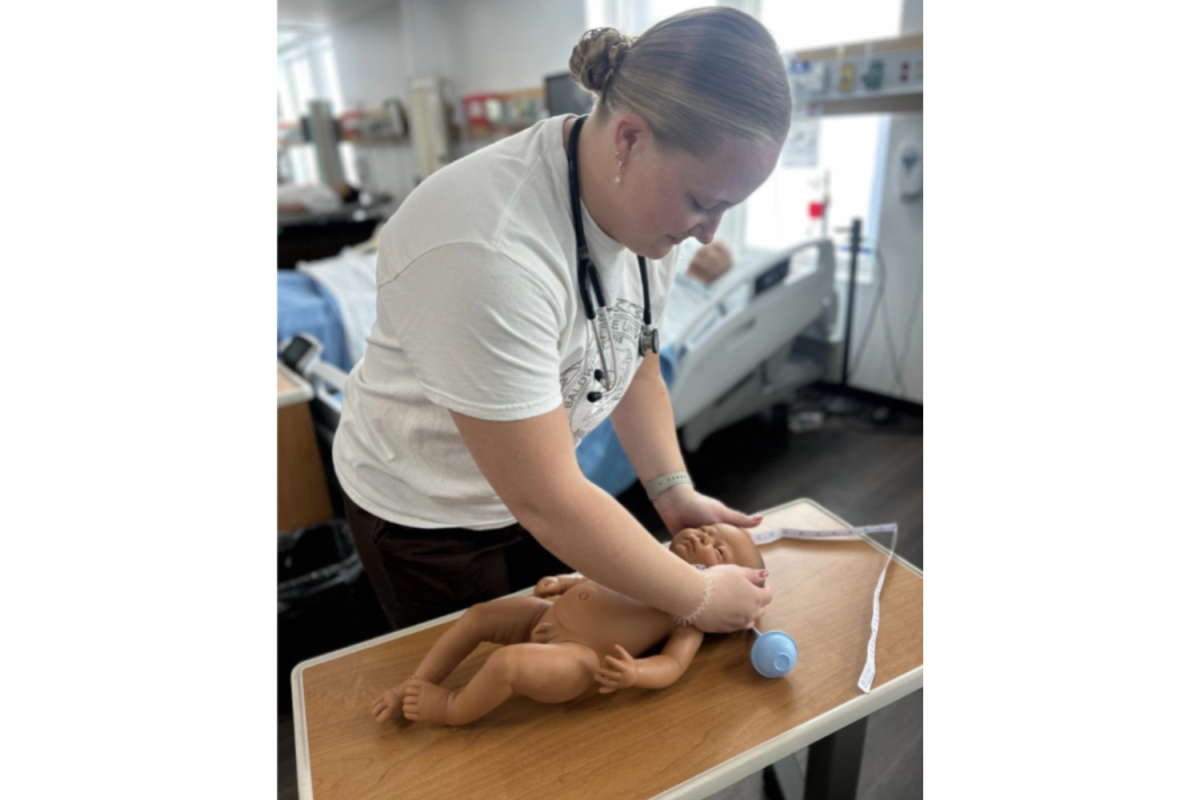
The nursing program begins clinicals during the students’ sophomore year, introducing a patient-based curriculum that focuses intensely on patient care.
Senior nursing major Ellen Fox explains, “The second semester of sophomore year, they front load you. Two weeks of class and lab, [saying] here are the basics on how to interact with patients. We learn a lot about the social dilemmas and social determinants of health… we were going into nursing homes [because] you need to know how to navigate those situations.”
While emphasizing the importance of patient care practice, BW also focuses on student safety in healthcare environments. The nursing program trains students in hospital assault response training, a skill that nurses usually receive in hospital settings. This training is for the safety of patients and nursing students alike.
“Behaviors and assaults on healthcare workers is an important topic; we don’t want people to be at the brunt of violence,” Flenoury said. “Students are in clinical settings before they are nurses.” Flenoury also pointed out that BW is the first school in Ohio to incorporate this training into its program.
Open and constant communication enables a fluid curriculum that can adapt to the evolving needs of modern medicine. The small size of BW’s nursing program promotes an adaptable environment. The program fosters a nursing community where students can adapt and learn at every step.
“It helps to allow for personal touches,” Flenoury said. “All the faculty are involved in the students’ decisions. While they have specific tasks, we are all involved in our curriculum.”
Fox explained that BW indirectly helped her secure an externship. Currently, she works as a nurse’s aide in the pediatric ICU at the Cleveland Clinic’s main campus. After graduating, she wants to continue working as an RN in the cardiovascular pediatric ICU.
“BW brought recruiters in, and I had no idea what it was… now I have a job,” Fox said. “It’s cool. It’s the little things that they do like bring the recruitment in [it] allowed me to find a job for the future.”
In a career that can be demanding, BW focuses on more than just curriculum to build an adaptable and buildable foundation for nursing students, one that is current with modern healthcare demands.
