











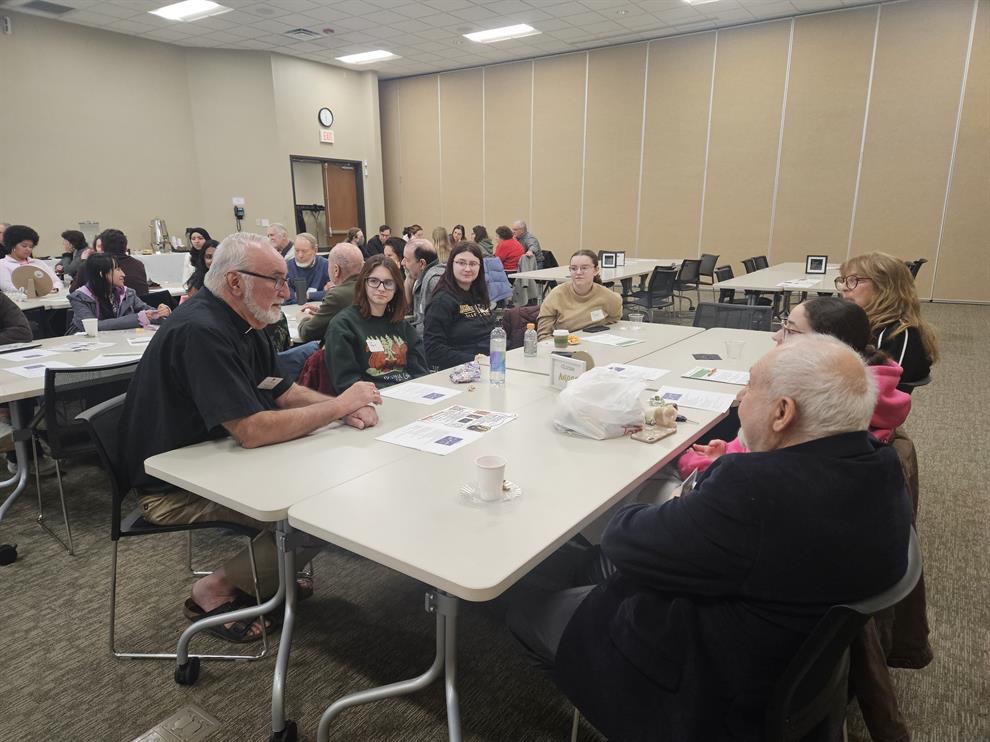
On Feb. 9, the WISE (World Interfaith Social Ethics) Center of Baldwin Wallace University hosted a panel discussion about fasting as Lent and Ramadan are approaching. Since both holidays are almost on the same schedule this year, the WISE Center wanted to facilitate a discussion about the similarities and differences of these respective holiday seasons, including discourse on how fasting affects the body.
The WISE Center at BW works hard to help educate the Berea community and beyond about the diversity of worldviews and religion to combat prejudice and stereotypes. Student Director of the WISE Center and senior history major at BW, Elanna Su, said, “I think we always assume we’re more different than we are similar.”
“We are the melting pot nation, and the fact that millions of people will be fasting this month, just in America alone, is important to us,” Su said.
The WISE Center invited priests from the Catholic and Orthodox Christian community, a pastor from the United Methodist Church of Berea, a Muslim student-athlete from John Carroll University, and a local Muslim leader in Cleveland. Throughout the conversation, panelists reflected on both the shared intentions and distinct practices that define fasting across faiths. While methods vary, each speaker emphasized that fasting is ultimately meant to foster discipline, compassion, and spiritual renewal rather than simply physical restraint.
“The main goal for both [Lent & Ramadan] is spiritual awakening, a goal of learning more about yourself and strengthening your relationship to God,” Su said. “I think it’s the key factor that brings it all together.”
The WISE Center also provided an array of foods that Chair of the Allied Health Department at BW, Dr. Amy Jo Sutterluety, described as the foods that will most benefit one through fasting. The table included nutrient-rich fruits like pineapples and grapes, different carb loaders like cheese and crackers, and highlighted specifically were different options of dates.
Beyond the practical aspects, the event underscored the importance of interfaith dialogue on campus. By bringing together voices from different religious backgrounds, the discussion created a space where curiosity was welcomed and misconceptions could be addressed openly.
“I think fostering that space where students don’t feel ostracized for practicing their religious beliefs is always important to highlight,” Su said.